Apples, Oranges, and Oil Changes
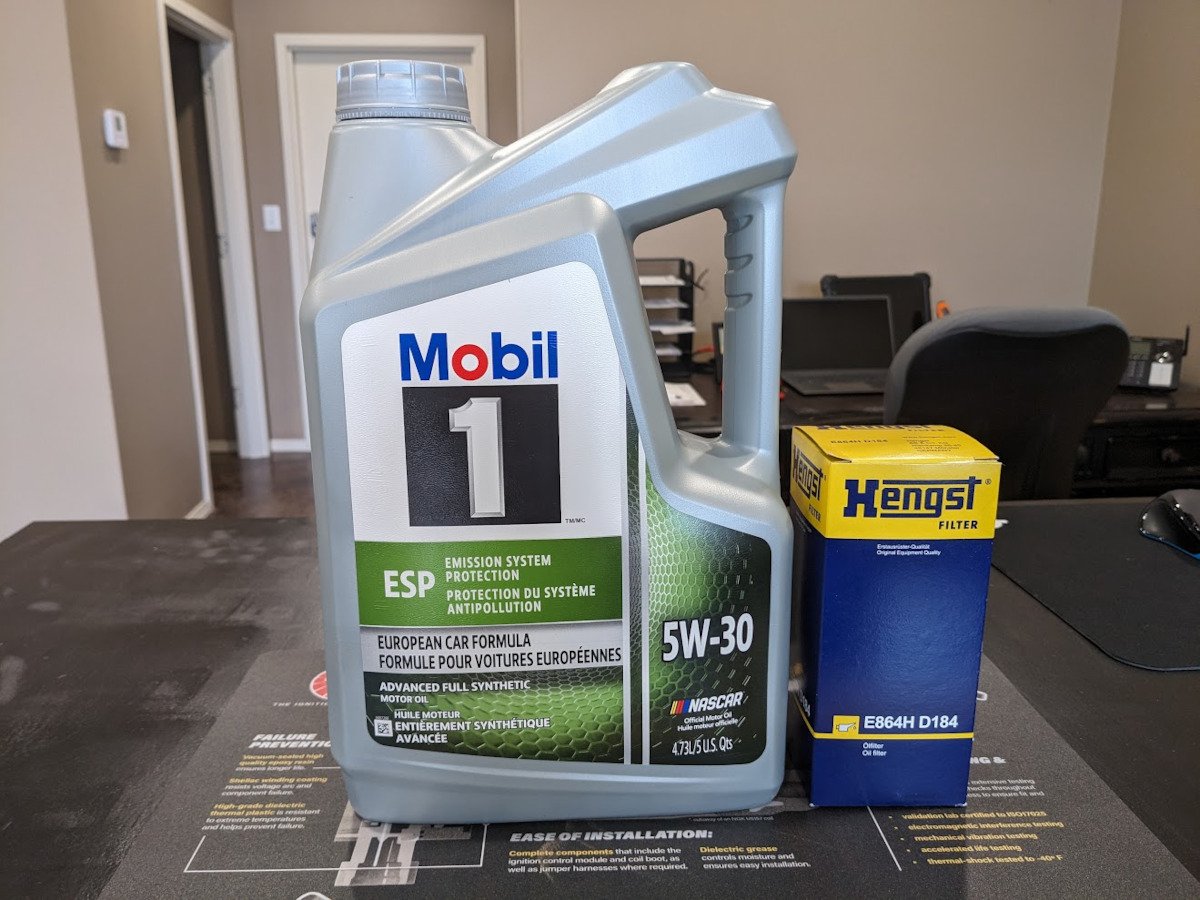
Whether you drive a high-end German luxury car, an electric vehicle, or a twenty year old Toyota with three hundred thousand miles, regular maintenance is essential to keeping your vehicle on the road. Regardless of age or make, well-maintained vehicles consistently prove to be more reliable and longer-lasting than their poorly-maintained and sometimes abused counterparts. Drivers today have several options when it comes to choosing a provider for vehicle maintenance. There are quick-lube shops that specialize in speedy maintenance, supermarkets that will change your oil while you shop, and fully-equipped professional repair facilities. While all of these facilities offer oil change services, the quality and scope of the service they provide are extremely different. Many drivers are caught unaware of this fact and consequently suffer from unexpected breakdowns and premature component failures due to lack of maintenance. This article is intended to explain the potential benefits and drawbacks of each option.
If you’ve ever been to a hospital, you’ve probably noticed that the staff is composed of a hierarchy of medical professionals. From nursing assistants, to nurse practitioners, to specialist physicians like surgeons and neurologists, each member of the staff is equipped with a special set of skills. The same is true of large automotive repair facilities. However, in the automotive world, all of these staff members have the same job title: Technician. Whether you take your vehicle to a quick-lube shop, a supermarket automotive center, or a professional repair facility, the work will be performed by an automotive technician, but the level of skill and experience of these individuals are profoundly different. Your supermarket auto center is typically staffed by the lowest level technicians. They change oil, repair tires, and swap out air filters and batteries, and that’s usually all they’re qualified to do. A quick lube shop may or may not have one or two reasonably experienced technicians on site, but the majority of the work is performed by low-skilled “lube techs” that mostly just change oil and filters. A full service repair facility will typically have at least one ASE certified Master Automotive Technician who is supported by other ASE certified technicians with varying degrees of experience. You might ask, “Why does that matter if they’re only changing my oil?” That’s a fair question. It matters because a proper oil change should always involve a thorough inspection of the vehicle and all critical components. Having your vehicle inspected by a fully-trained technician on a regular basis helps identify problems before they leave you stranded, and allows you to stay abreast of the maintenance needs.
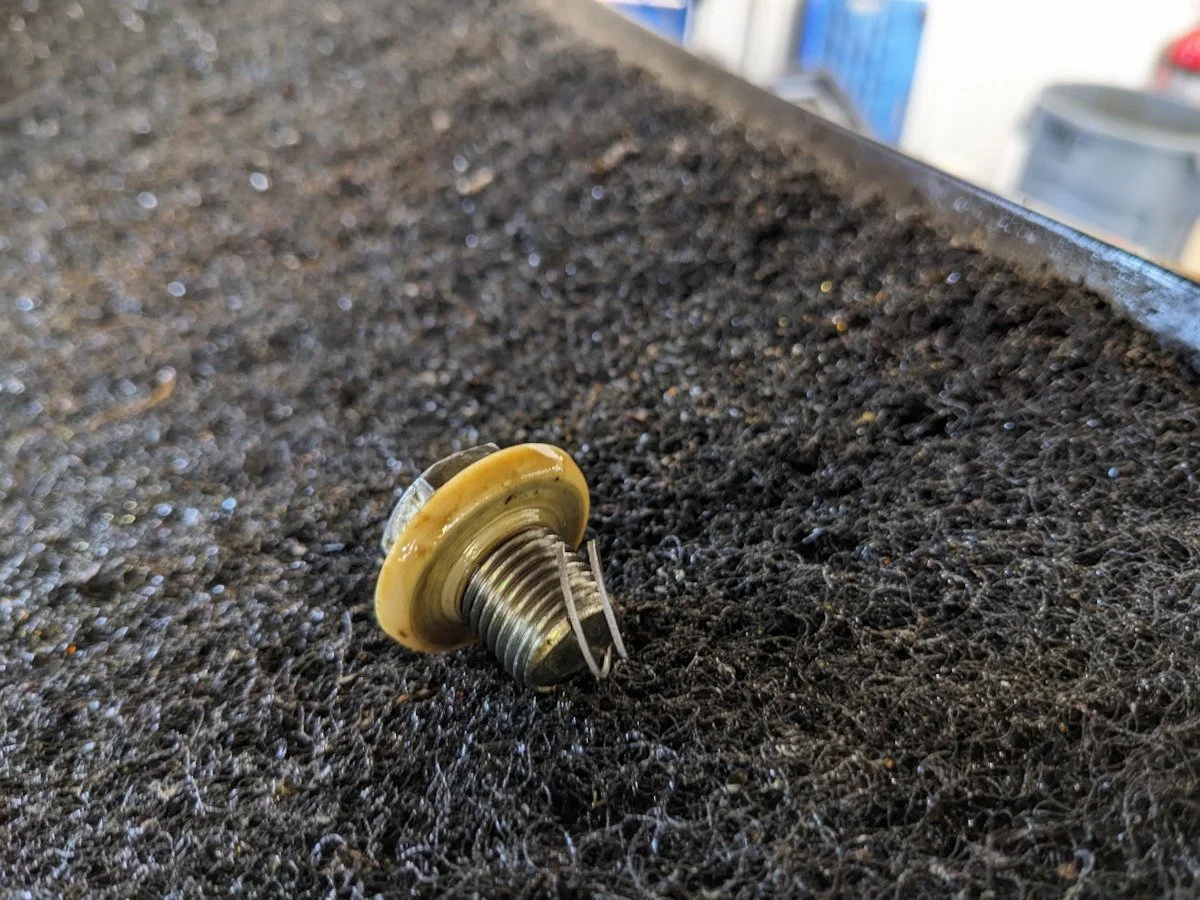
This oil drain plug was overtightened by a quick lube shop during the previous oil change service. This severely damaged the threads in the oil pan, causing several of them to fall out when the plug was removed. Reparing this issue often involves replacing the entire oil pan, which can cost anywhere from a few hundred dollars to over a thousand depending on the vehicle.
The next area where these types of facilities differ is in knowledge of and attention to OEM specifications for fluids and filters. Many modern vehicles, including nearly all Volkswagen, Mercedes-Benz, and BMW models, recommend a 10,000 mile oil change interval. While there’s plenty of debate about whether an interval this long is ideal for your engine, it usually doesn’t harm the vehicle as long as you use an oil and filter that meets the standards of the manufacturer. Unfortunately, a large majority of supermarket auto centers and quick lube shops fail to understand or even consider the OEM oil specification. This leads to an all-to-common scenario where the owner of a high-end vehicle regularly visits a quick-lube shop for maintenance. The lube shop will fill the car with a low-cost generic synthetic oil, install a discount grade filter made in southeast Asia, and then reset the oil life in the vehicle’s maintenance system. The problem is that the vehicle doesn’t know it’s filled with generic oil that’s only rated for 5,000 mile intervals. Consequently, it doesn’t remind you of the need for an oil change until 10,000 miles later, by which time the oil is badly degraded and the filter medium is clogged with sludge. Over time, this mismatch leads to sludge buildup, seized piston-rings, and dramatically shortened engine life. You might notice that the oil change costs a lot less than what you would pay at a dealership or full-service repair shop. This might seem like great savings until you’re faced with the need for an extremely expensive engine replacement at relatively low mileage with no explanation for what caused the failure. We see this situation play out on a regular basis. At Red Dirt Euro and EV, and most other full-service shops, your vehicle is always going to receive oil and filters that meet your manufacturers specifications. While you pay a little more at each visit, you drive further between oil changes, and you can expect a much longer service life from your engine.
The last difference between quick lube shops and full-service repair shops is the attention to detail and quality of workmanship. Because speed of service is a primary marketing point for supermarket auto centers and lube shops, their technicians are always in a rush to complete the service and get the vehicle back to you. This leads to a long list of common errors that can result in everything from minor leaks and drips to damaged threads that require major repairs to correct. Vehicle owners often aren’t even aware of the problem until months later when the vehicle gets its next service, and a poorly-trained technician may not even understand what caused the issue in the first place, much less take responsibility for it.
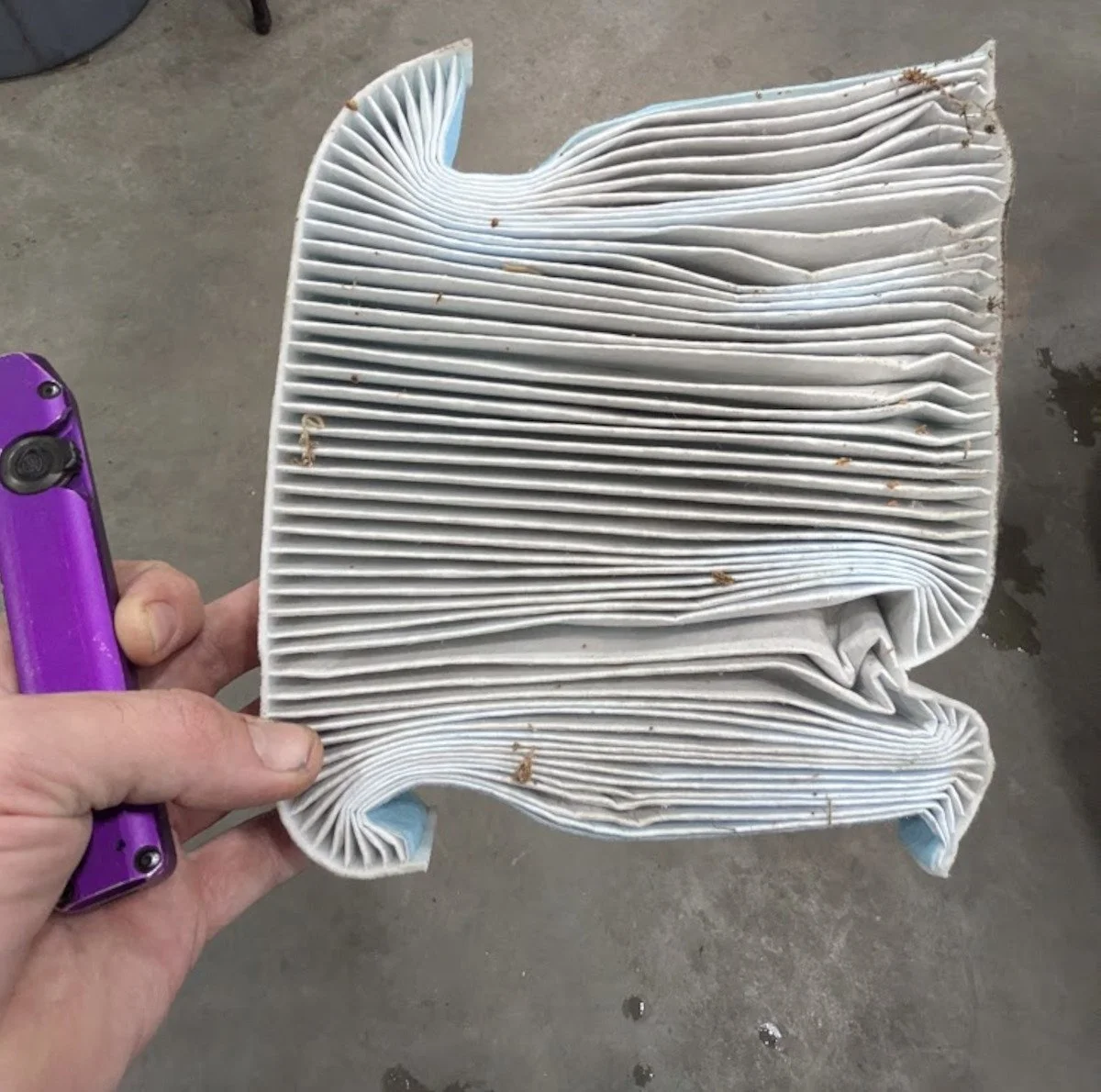
This cabin air filter was crushed while being installed by a quick lube shop, leading to large gaps between the filter and housing and allowing dirt and debris to pass by the filter.
I understand that having your vehicle serviced by fully-trained automotive technicians often requires more time and money than taking it to a quick lube shop, but there is a night and day difference between the services provided by each facility and the resulting effects on your vehicle. Modern vehicles are expensive, and represent a major investment for most families. Proper vehicle maintenance is absolutely essential to protecting that investment and providing the greatest return in the form of trouble-free miles. While the convenience of having your oil changed while you shop for groceries is tempting, it’s just not worth the long term effect on your vehicle, and consequently your pocketbook. I’ve been changing oil and inspecting vehicles for well over twenty years, and I can tell you without hesitation that the customers who consistently have the best experiences with their vehicles are the ones that invest in regular maintenance performed by fully-trained technicians.